Blog

  • Bitcoin Passive Income in the USA 2026

    Bitcoin Passive Income in the USA 2026

    Bitcoin Passive Income in the USA: How to Earn While You Sleep

    The allure of Bitcoin has evolved far beyond trading for short-term gains. Today, savvy investors in the USA are discovering ways to create passive income streams using Bitcoin, generating earnings without actively trading day to day. In this article, we explore the most effective methods, risks, tools, and strategies to earn passive income from Bitcoin in the United States.

    1. Understanding Bitcoin Passive Income

    What is Passive Income?

    Passive income is money earned with minimal effort. Traditional examples include rental properties, dividends, and royalties. With the rise of cryptocurrencies, Bitcoin offers a digital avenue for passive earnings.

    Why Bitcoin?

    Bitcoin is decentralized, borderless, and has a limited supply, making it an attractive store of value. For Americans seeking long-term financial independence, Bitcoin passive income is appealing because it allows you to leverage your holdings rather than relying solely on price appreciation.

    2. Methods to Earn Bitcoin Passive Income in the USA

    2.1 Bitcoin Staking Alternatives (Wrapped BTC & DeFi Platforms)

    Although Bitcoin itself cannot be staked like Ethereum, wrapped Bitcoin (WBTC) and DeFi (Decentralized Finance) platforms allow BTC holders to earn interest.

    • How It Works: You deposit BTC or WBTC into a DeFi lending protocol, which loans your crypto to others, earning interest in return.
    • Popular Platforms in the USA:

    Pros: High yields (up to 6–8% annually), compounding potential.
    Cons: Smart contract risk, platform insolvency, regulatory uncertainty.

    2.2 Bitcoin Lending

    Bitcoin lending works similarly to DeFi but is often centralized. In the USA, platforms allow you to lend BTC to borrowers and earn interest.

    • Centralized Lending Examples:
      • BlockFi (interest-bearing accounts)
      • Nexo (instant crypto lending)
    • Earnings: Depending on platform and duration, BTC lenders can earn 4–10% annual interest.

    Important Consideration: Always choose platforms insured or regulated in the USA to mitigate risk.

    2.3 Yield Farming with Bitcoin

    Yield farming involves moving your BTC to protocols offering the highest returns. While popular in Ethereum DeFi, BTC has entry points via tokenized assets like WBTC.

    • How It Works: Deposit BTC into liquidity pools to earn fees and incentives.
    • Risk: Impermanent loss, volatility of rewards, platform vulnerability.

    2.4 Bitcoin Mining

    Mining has traditionally been the most passive method for early adopters. While energy costs are high in the USA, large-scale mining farms still generate significant revenue.

    • Requirements: ASIC miners, electricity, cooling systems.
    • Pros: Potentially high returns if BTC prices rise.
    • Cons: Expensive initial setup, electricity costs, increasing mining difficulty.

    Alternative: Join mining pools to reduce upfront costs and earn steady payouts.

    2.5 Bitcoin Faucets and Micro-Investing Apps

    While low-yield, these methods are beginner-friendly. Apps distribute small amounts of BTC for free or in exchange for tasks.

    • Examples in the USA:
      • Coinbase Earn
      • StormX

    3. Top Platforms for Bitcoin Passive Income in the USA

    Platform Type APY/Returns Notes
    BlockFi Lending 4–6% Regulated US-based platform
    Nexo Lending & Staking 5–10% Offers insured custodial services
    Celsius Network Lending 6–8% Paused some US operations, check current status
    Binance.US DeFi Savings 2–5% Requires US KYC verification
    Kraken Staking 1–3% Low-risk, regulated

    4. Understanding Risks in Bitcoin Passive Income

    Bitcoin Passive Income in the USA 2026
    Bitcoin Passive Income in the USA 2026

    While Bitcoin passive income is attractive, it is not without risk.

    1. Price Volatility: Earnings in BTC can fluctuate dramatically in USD terms.
    2. Platform Risk: Centralized platforms may face insolvency or regulatory shutdowns.
    3. Cybersecurity Threats: Hacks are common; always use secure wallets.
    4. Regulatory Changes: US law may change, impacting interest and lending legality.
    5. Tax Implications: All earnings in BTC are taxable. IRS considers cryptocurrency as property. Report gains accurately.

    5. Tax Considerations for Americans

    5.1 IRS Guidelines

    • Bitcoin interest is taxable as ordinary income.
    • Lending, staking, and mining profits must be reported.
    • Keep accurate records of BTC earned and its USD value at the time of receipt.

    5.2 Strategies to Optimize Taxes

    • Hold long-term for potential capital gains advantages.
    • Use crypto tax software (e.g., CoinTracker, TokenTax) to track earnings.
    • Consider consulting a US CPA experienced in cryptocurrency.

    6. Maximizing Bitcoin Passive Income in the USA

    6.1 Diversify Platforms

    Don’t put all BTC in one platform. Spread across multiple services to reduce counterparty risk.

    6.2 Automate Earnings

    Use platforms offering automatic reinvestment for compounding interest.

    6.3 Stay Informed

    Follow U.S. crypto regulations and market trends. Laws can change and affect your passive income.

    6.4 Use Cold Wallets for Security

    Keep the majority of your BTC offline to prevent hacks while only depositing funds meant for passive income.

    7. Case Studies: Successful Bitcoin Passive Income in the USA

    Bitcoin Passive Income in the USA 2026
    Bitcoin Passive Income in the USA 2026

    Case Study 1: Lending BTC with Nexo

    • Initial Investment: 5 BTC
    • Annual Interest Rate: 7%
    • Earnings: 0.35 BTC per year without trading

    Case Study 2: Yield Farming with WBTC

    • Investment: 2 WBTC
    • Pool APY: 12%
    • Result: 0.24 WBTC per year, though returns fluctuate with pool performance

    These examples illustrate that consistent earnings are possible with careful platform choice and strategy.

    8. Future of Bitcoin Passive Income in the USA

    The US cryptocurrency market is maturing. With increasing adoption:

    • Decentralized Finance growth will provide more ways to earn.
    • Regulatory clarity may increase safety for passive income investors.
    • Institutional investment may create higher yield options as banks adopt crypto services.

    9. Beginner-Friendly Steps to Start Earning Bitcoin Passive Income

    1. Acquire Bitcoin via a reputable US exchange (Coinbase, Kraken, Gemini).
    2. Select a Platform based on risk tolerance and desired APY.
    3. Deposit BTC and choose whether to lend, stake, or farm.
    4. Track Earnings and reinvest for compound growth.
    5. Stay Updated on market trends and regulatory news.

    10. Conclusion

    Bitcoin passive income in the USA offers a compelling opportunity for Americans seeking financial independence. By leveraging lending, staking alternatives, yield farming, or mining, investors can generate consistent earnings from their Bitcoin holdings. However, careful platform selection, risk management, and tax compliance are essential for success. With the right strategy, Bitcoin can become a powerful tool for earning while you sleep.

     

  • Best Health Insurance Plans for Families in 2026

    Best Health Insurance Plans for Families in 2026

    Best Health Insurance Plans for Families in 2026

    Healthcare costs continue to rise across the world, and having the right health insurance for your family in 2026 is more important than ever. Insurance protects your loved ones from unexpected medical bills, hospitalizations, surgeries, and long-term care — giving you peace of mind and financial security.

    This guide explains how to choose the best family health insurance plans, highlights top options in major markets, and gives practical tips to decide what’s right for your family.

    Why Health Insurance Matters for Families in 2026

    Best Health Insurance Plans for Families in 2026
    Best Health Insurance Plans for Families in 2026

    With increasing medical expenses, many families are finding it harder to pay out-of-pocket for treatments. For example, in the United States, average employer-sponsored family health insurance premiums have been rising year after year, with projected increases continuing into 2026.

    Good health insurance protects you from:

    It also provides cashless treatment options at network hospitals and helps you avoid financial stress.

    Key Features to Look for Before Buying

    Before choosing a plan, make sure it includes these essential elements:

    1. Adequate Sum Insured

    The sum insured should cover expected healthcare costs for all family members. Consider medical inflation — a modest plan today may not be enough in a few years.

    2. Family Coverage / Floater Plans

    A family floater plan covers multiple members under one policy and is usually more affordable than individual plans.

    3. Cashless Hospital Network

    Choose plans with a wide network of cashless hospitals so you don’t have to pay upfront during emergencies.

    4. No Room Rent or Sub-limits

    Look for plans without strict room rent caps, sub-limits on procedures, or hidden restrictions — these can increase your out-of-pocket costs.

    5. Restoration Benefits

    This feature restores your sum insured if it gets exhausted due to a major claim, giving you continued protection.

    6. Waiting Period for Pre-Existing Diseases

    Check how long you must wait before coverage applies to pre-existing conditions — shorter waiting periods are better.

    Top Family Health Insurance Plans in 2026 (Global & Local Examples)

    Below are trusted examples of good family health insurance options in 2026, which you can consider based on your location and healthcare system.

    1. Kaiser Permanente (USA)

    Best For: Low out-of-pocket maximum and strong coverage

    • Offers comprehensive coverage with $0 deductible options
    • Known for excellent preventive care and integrated provider network
    • Helps reduce total family health expenses by providing coordinated care and preventive screenings

    2. Blue Cross Blue Shield (USA)

    Best For: Budget-friendly family coverage

    • Plans available in every U.S. county
    • Broad provider network and flexible tier options (Silver, Gold, Platinum)
    • Lower monthly premiums and strong preventive services
    • Coverage includes hospital care, doctor visits, and often wellness programs

    3. Ambetter (USA)

    Best For: Balanced coverage with mid-range cost

    • Good mix of monthly premium vs. coverage
    • Includes comprehensive benefits with reasonable deductibles
    • Strong quality ratings and access to care network

    4. HDFC ERGO Optima Restore (India)

    Best For: Comprehensive family coverage with restoration

    • Automatic increase in sum insured
    • Restore benefit after major claims
    • No strict room rent limits
    • Includes wellness and fitness benefits, optional riders

    5. Star Health Family Health Optima (India)

    Best For: Affordable family floater with extras

    • Covers hospitalization, pre/post-hospitalization, and daycare procedures
    • Restoration benefits
    • Free telemedicine consultations
    • Wide hospital network for cashless claims

    6. Niva Bupa Health Companion / ReAssure 2.0 (India)

    Best For: High coverage and restoration

    • Wide sum insured options up to large limits
    • No room rent restrictions on some variants
    • Global emergency coverage options
    • Restoration benefits and wellness rewards

    7. ICICI Lombard Health AdvantEdge (India)

    Best For: Premium family health needs

    • High sum insured options up to ₹3 crore or more
    • No sub-limits on ICU/room rent
    • International coverage options
    • Strong hospital network and customer service

    8. Care Health Insurance Family Plans (India)

    Best For: Comprehensive coverage with wellness incentives

    • High restoration benefits
    • Maternity and newborn coverage
    • Wide cashless hospital network
    • Wellness rewards and preventive benefits

    International Marketplace Choice (Healthcare Systems Outside India & USA)

    In countries with national healthcare systems (e.g., UK, Canada, Australia), private health insurance plays a supplemental role:

    • In the UK, private plans can reduce waiting times and offer choice of specialists, but public system access remains primary.
    • In Australia and Canada, private coverage often focuses on specialties or elective procedures not fully covered by public healthcare.

    Always consider the local healthcare environment when choosing between public and private plans.

    Tips to Choose the Best Family Health Insurance

    1. Assess Your Family’s Needs

    Include spouse, children, and possibly elderly parents — older members often need higher coverage.

    2. Look Beyond Price

    Lower premiums can mean higher out-of-pocket costs when you claim. Focus on overall value.

    3. Compare Claim Settlement Ratio

    A higher claim settlement ratio indicates better chances of successful claims.

    4. Check Waiting Periods

    Shorter waiting periods for pre-existing conditions are ideal.

    5. Review Riders/Add-Ons

    Consider optional covers like maternity, critical illness, or personal accident riders.

    FAQs – Family Health Insurance in 2026

    Q1: How much family health insurance should I buy?

    For middle-income families, coverage often ranges from $250,000 to $1 million+ (or corresponding local currency) depending on age and medical needs. In India, sum insured often starts from ₹5 lakh to ₹1 crore or more.

    Q2: Should elderly parents be included in the same plan?

    Sometimes it’s better to buy separate senior plans for parents, especially if their health conditions are significantly different from younger family members.

    Q3: What is a family floater plan?

    A family floater covers all members under one sum insured, making it cost-effective and easy to manage.

    Q4: Are private health insurance plans worth it in countries with public healthcare?

    Yes — private plans reduce waiting times, give access to specialists, and cover services not included in public systems.

    Q5: How do premiums change over time?

    Premiums typically increase with age and healthcare inflation. Shop around each year to find the best value.

    Conclusion

    Choosing the best health insurance for your family in 2026 means balancing cost, coverage, and benefits. Whether you’re in the USA, India, or another country, the right plan protects your family’s health and finances from unexpected medical emergencies.

  • Best Side Hustles That Pay $1,000+ Per Month

    Best Side Hustles That Pay $1,000+ Per Month

    With rising living costs and uncertain job markets, more people are looking for side hustles that can generate at least $1,000 per month. The good news is that in 2026, there are more opportunities than ever—especially for beginners in Tier-1 countries like the US, UK, Canada, and Australia.

    This guide breaks down real, proven side hustles that don’t rely on scams or unrealistic promises. These are skills-based, demand-driven, and scalable ideas that thousands of people already use to earn consistent income.

    What Makes a Side Hustle Profitable?

    Before jumping in, it’s important to understand why some side hustles work while others fail.

    Key Factors of a Successful Side Hustle:

    • High demand
    • Low startup cost
    • Scalable income
    • Skill-based or value-driven
    • Online or flexible work

    The side hustles below meet all these criteria.

    1. Freelancing (Writing, Design, Tech, Marketing)

    Freelancing remains one of the fastest ways to earn $1,000+ per month.

    Popular Freelance Skills:

    • Content writing & blogging
    • Graphic design & branding
    • Video editing
    • Web development
    • SEO & digital marketing

    Why It Works:

    • Clients pay in USD
    • Work remotely
    • Scale by increasing rates or clients

    Even beginners can start with small projects and grow steadily.

    2. Blogging (Long-Term Passive Income)

    Blogging can become a high-earning side hustle if done correctly.

    How Bloggers Make Money:

    • Display ads (AdSense)
    • Affiliate marketing
    • Sponsored posts
    • Digital products

    Realistic Income Timeline:

    • First 3–6 months: Learning & content
    • 6–12 months: $500–$1,000/month
    • Long term: Scalable income

    Blogging works best for people who enjoy writing and consistency.

    3. YouTube Automation or Faceless Channel

    Best Side Hustles That Pay $1,000+ Per Month
    Best Side Hustles That Pay $1,000+ Per Month

    You don’t need to show your face to succeed on YouTube.

    Content Ideas:

    • Tech explainers
    • Finance education
    • Motivational videos
    • Facts & list videos

    Income Sources:

    • YouTube ads
    • Sponsorships
    • Affiliate links

    With the right niche, $1,000+ per month is very achievable.

    4. Affiliate Marketing

    Affiliate marketing means earning commissions by promoting products.

    Where to Promote:

    • Blogs
    • YouTube
    • TikTok
    • Email newsletters

    Why It’s Powerful:

    • No product creation
    • Passive income potential
    • High commissions in Tier-1 markets

    Focus on trusted products and helpful content—not spam.

    5. Selling Digital Products

    Digital products have high profit margins.

    Examples:

    • E-books
    • Online courses
    • Templates
    • Planners
    • Design assets

    Create once, sell repeatedly. Many creators cross $1,000/month with just one solid product.

    6. Online Coaching or Consulting

    If you have experience in any field, you can monetize it.

    Popular Coaching Niches:

    • Fitness & health
    • Career coaching
    • Freelancing & business
    • Personal finance basics

    Charging just $50–$100 per session can quickly cross $1,000/month.

    7. Social Media Management

    Small businesses need help managing social media.

    Tasks Include:

    • Posting content
    • Replying to comments
    • Basic analytics
    • Scheduling posts

    Managing just 3–5 clients can easily generate $1,000+ monthly.

    8. Virtual Assistant (VA) Services

    Virtual assistants handle online tasks for businesses.

    Common VA Tasks:

    • Email management
    • Data entry
    • Customer support
    • Scheduling

    It’s beginner-friendly and pays well with consistent clients.

    9. Print-on-Demand (POD) Business

    POD lets you sell custom designs without inventory.

    Products:

    • T-shirts
    • Hoodies
    • Mugs
    • Phone cases

    Platforms handle printing and shipping. You focus on design and marketing.

    10. AI-Based Side Hustles

    AI tools have created new income opportunities.

    Examples:

    • AI content creation services
    • AI video editing
    • Automation setup for businesses
    • Prompt engineering

    These skills are in high demand and pay premium rates.

    Side Hustles That Work Best for Beginners

    If you’re just starting, focus on:

    • Freelancing
    • Virtual assistance
    • Content creation
    • Blogging
    • Affiliate marketing

    They require low investment and basic skills.

    How Long Does It Take to Earn $1,000 Per Month?

    Realistic Timeline:

    • Freelancing / VA: 1–3 months
    • Blogging / YouTube: 6–12 months
    • Digital products: 2–6 months
    • Affiliate marketing: 3–9 months

    Consistency matters more than speed.

    Mistakes That Stop People from Earning

    Avoid these common mistakes:

    • Chasing too many ideas
    • Expecting instant money
    • Giving up too early
    • Not learning basic skills
    • Ignoring audience value

    Stick to one side hustle and improve daily.

    FAQs – Best Side Hustles That Pay $1,000+ Per Month

    Q1: Can beginners really earn $1,000 per month?

    Yes, with skill development and consistency.

    Q2: Are side hustles safe and legal?

    Yes, all listed side hustles are legal and legitimate.

    Q3: How much time is required daily?

    2–4 hours per day is enough for most side hustles.

    Q4: Which side hustle is fastest?

    Freelancing and virtual assistant work usually pay the fastest.

    Q5: Can side hustles become full-time income?

    Absolutely. Many people turn side hustles into full-time businesses.

    Conclusion

    Earning $1,000+ per month from a side hustle is realistic in 2026 if you focus on the right opportunities. Whether you choose freelancing, blogging, affiliate marketing, or digital products, success depends on learning, consistency, and providing real value.

    Start small, stay focused, and build gradually—your side hustle can become a powerful source of financial freedom.


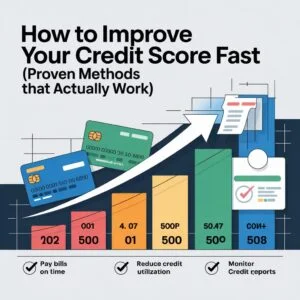
  • How to Improve Your Credit Score Fast Best Info 2026

    How to Improve Your Credit Score Fast Best Info 2026

    A good credit score can open doors to better financial opportunities, while a poor credit score can quietly block your progress. Whether you want to get approved for a credit card, rent an apartment, or qualify for a lower interest loan, your credit score plays a huge role.

    The good news? Improving your credit score doesn’t have to take years. With the right strategies, you can see noticeable improvement in a short time—especially if you live in Tier-1 countries like the United States, United Kingdom, Canada, or Australia.

    This guide explains proven, realistic methods to improve your credit score fast, using simple language that beginners can easily understand.

    What Is a Credit Score and Why Does It Matter?

    A credit score is a number that shows how trustworthy you are with borrowed money. It is based on your credit history and financial behavior.

    Why Your Credit Score Is Important:

    • Easier loan and credit card approvals
    • Lower interest rates
    • Better rental and housing options
    • Improved financial reputation

    A higher score means lenders see you as low risk.

    How Credit Scores Are Calculated (Simple Breakdown)

    Understanding this helps you improve faster.

    Main Factors That Affect Your Credit Score:

    • Payment history – Do you pay on time?
    • Credit utilization – How much credit are you using?
    • Credit history length – How old are your accounts?
    • Credit mix – Types of credit you use
    • New credit inquiries How often you apply for credit

    Focusing on the right areas can boost your score quickly.

    1. Pay All Bills on Time (Most Important Step)

    Payment history is the biggest factor affecting your credit score.

    How to Fix This Fast:

    • Pay at least the minimum amount due
    • Set up automatic payments
    • Use reminders for due dates

    Even one missed payment can hurt your score, while consistent on-time payments can improve it faster than you think.

    2. Reduce Your Credit Card Balances Immediately

    Credit utilization refers to how much of your available credit you are using.

    Ideal Rule:

    Try to use less than 30% of your total credit limit.

    Example:

    If your credit limit is $1,000, keep your balance below $300.

    Fast Improvement Tip:

    Pay down balances instead of closing accounts—this lowers utilization without reducing your available credit.

    3. Do Not Close Old Credit Accounts

    Many people make the mistake of closing old cards.

    Why This Hurts Your Score:

    • Shortens your credit history
    • Increases credit utilization

    Even if you don’t use an old card, keeping it open (with zero balance) helps your score.

    4. Check Your Credit Report for Errors

    Credit report mistakes are more common than people realize.

    Common Errors Include:

    • Incorrect late payments
    • Accounts you don’t recognize
    • Wrong balances or limits

    What to Do:

    • Request a free credit report
    • Dispute any errors you find
    • Follow up until corrected

    Fixing errors can boost your score quickly.

    5. Avoid Applying for New Credit Too Often

    Each credit application creates a hard inquiry.

    Why This Matters:

    • Too many inquiries lower your score
    • Makes you look desperate for credit

    Smart Strategy:

    Only apply for new credit when necessary—especially while improving your score.

    6. Become an Authorized User (If Possible)

    This is one of the fastest legal ways to improve your credit score.

    How It Works:

    • A trusted person adds you to their credit card
    • Their good payment history reflects on your credit

    Important:

    Make sure the card has:

    • Long history
    • Low balance
    • On-time payments

    7. Use Credit Cards Regularly (But Carefully)

    Not using credit at all can slow progress.

    Best Practice:

    • Use your card for small purchases
    • Pay the balance in full every month

    This shows lenders that you can use credit responsibly.

    8. Settle or Negotiate Past-Due Accounts

    Unpaid collections seriously damage your score.

    What You Can Do:

    • Pay off old debts
    • Negotiate settlements
    • Request “pay for delete” when possible

    While settling doesn’t erase history instantly, it prevents further damage.

    9. Keep Your Credit Mix Balanced

    A healthy mix improves your credit profile.

    Examples of Credit Types:

    • Credit cards
    • Installment loans
    • Auto or student loans

    You don’t need all types—just avoid relying on a single form of credit.

    10. Be Patient but Consistent

    Fast improvement is possible, but consistency matters most.

    Realistic Timeline:

    • Small improvements: 30–60 days
    • Significant improvement: 3–6 months

    Avoid shortcuts and stay consistent for long-term success.

    Common Credit Score Mistakes to Avoid

    • Paying late, even once
    • Maxing out cards
    • Closing old accounts
    • Applying for too many cards
    • Ignoring credit reports

    Avoiding these mistakes protects your progress.

    FAQs – Improving Credit Score Fast

    Q1: How fast can I improve my credit score?

    Small improvements can happen within 30 days, while major changes take a few months.

    Q2: Does paying off debt increase credit score immediately?

    It can, especially if it lowers your credit utilization.

    Q3: Is it bad to check my own credit score?

    No. Checking your own score does not affect it.

    Q4: Can I improve my score without a credit card?

    Yes, but using credit responsibly speeds up improvement.

    Q5: What credit score is considered good?

    Generally, a score above 700 is considered good in most Tier-1 countries.

    Conclusion

    Improving your credit score fast is not about tricks—it’s about smart financial habits. Paying on time, reducing balances, avoiding unnecessary credit applications, and fixing report errors can dramatically improve your score in a short time.

    With patience and consistency, you can build a strong credit profile that unlocks better financial opportunities and long-term stability.

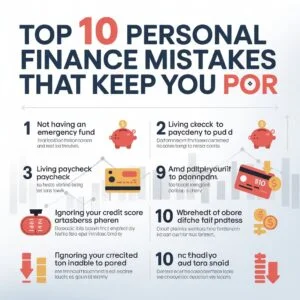
  • Top 10 Personal Finance Mistakes That Keep You Poor 2026

    Top 10 Personal Finance Mistakes That Keep You Poor 2026

    Many people work hard their entire lives yet still struggle financially. Often, the problem isn’t income—it’s financial habits. Small money mistakes repeated over time can quietly destroy your financial future and keep you stuck living paycheck to paycheck.

    The good news? Once you understand these mistakes, you can fix them. In this article, we’ll break down the top 10 personal finance mistakes that keep people poor, explained simply so beginners can take action immediately.

    Why Understanding Money Mistakes Is So Important

    Personal finance is less about how much you earn and more about how you manage what you earn. Even high earners can stay broke if they make poor financial decisions.

    Common Results of Bad Money Habits:

    • Constant stress about bills
    • No savings or emergency fund
    • Growing debt
    • No long-term security

    Avoiding these mistakes can completely change your financial future.

    1. Living Beyond Your Means

    This is the most common financial mistake.

    What It Looks Like:

    • Spending more than you earn
    • Using credit cards to cover basics
    • Lifestyle upgrades without income growth

    Living beyond your means creates constant debt and stress, making it impossible to build wealth.

    How to Fix It:

    • Track your income and expenses
    • Spend less than you earn
    • Focus on needs before wants

    2. Not Having a Budget

    Many people avoid budgeting because they think it’s restrictive. In reality, a budget gives you control.

    Why It’s a Problem:

    • No idea where money goes
    • Overspending without realizing
    • No clear financial goals

    Simple Solution:

    Create a basic budget that covers:

    • Essentials
    • Savings
    • Discretionary spending

    A budget is the foundation of financial success.

    3. Ignoring Emergency Savings

    Unexpected expenses happen to everyone—medical bills, car repairs, or job loss.

    Why This Keeps You Poor:

    • Forces reliance on debt
    • Destroys long-term savings
    • Creates financial panic

    Better Approach:

    • Save 3–6 months of expenses
    • Keep it in a safe, accessible account

    An emergency fund protects your future.

    4. Relying Too Much on Credit Cards

    Credit cards are useful tools—but dangerous when misused.

    Common Credit Card Mistakes:

    • Carrying balances
    • Paying only minimum amounts
    • Using credit for lifestyle upgrades

    High interest keeps people trapped in debt cycles.

    Smart Use:

    • Pay balances in full
    • Use cards for convenience, not survival
    • Avoid unnecessary purchases

    5. Not Investing Early

    Many people delay investing because they feel they don’t earn enough.

    Why This Is a Huge Mistake:

    • Missed compound growth
    • Lost time cannot be recovered
    • Inflation eats savings

    Simple Fix:

    • Start small
    • Invest consistently
    • Focus on long-term growth

    Time is more powerful than money when investing.

    6. Chasing Quick Money Scheme

    Top 10 Personal Finance Mistakes That Keep You Poor 2026
    Top 10 Personal Finance Mistakes That Keep You Poor 2026

    “Get rich quick” promises keep people poor.

    Examples:

    • Fake investment schemes
    • High-risk trading without knowledge
    • Unrealistic passive income promises

    Why It’s Dangerous:

    • High loss risk
    • Emotional decision-making
    • No long-term strategy

    Wealth is built slowly and steadily.

    7. Avoiding Financial Education

    Many people never learn basic money skills.

    Results:

    • Poor decisions
    • Fear of investing
    • Dependence on others

    What to Do:

    • Read personal finance content
    • Learn basics of saving, debt, and investing
    • Improve financial literacy gradually

    Knowledge is one of the best investments you can make.

    8. Not Setting Financial Goals

    Without goals, money has no direction.

    Why This Matters:

    • No motivation to save
    • No long-term planning
    • Easy to waste money

    Better Strategy:

    Set clear goals like:

    • Emergency fund
    • Home ownership
    • Retirement savings

    Goals give purpose to your money.

    9. Increasing Lifestyle With Every Raise

    Earning more money doesn’t automatically make you rich.

    Lifestyle Inflation Includes:

    • Bigger homes
    • Expensive cars
    • Costly habits

    Why It Keeps You Poor:

    • No increase in savings
    • More financial pressure
    • Missed investment opportunities

    Smart Move:

    Save and invest raises before upgrading lifestyle.

    10. Thinking “I’ll Start Later”

    Procrastination is a silent wealth killer.

    Common Excuses:

    • “I’ll save next year”
    • “I’ll invest when I earn more”
    • “It’s too late now”

    Reality:

    Starting late means:

    • Less compounding
    • Fewer options
    • More stress

    The best time to start was yesterday. The second-best time is today.

    How to Break Free From These Financial Mistakes

    Avoiding these mistakes doesn’t require perfection—just consistency.

    Simple Steps:

    • Track spending
    • Save automatically
    • Learn basic investing
    • Focus on long-term goals

    Small changes lead to massive results over time.

    FAQs – Personal Finance Mistakes

    Q1: Can someone become rich by fixing money habits?

    Yes. Strong habits matter more than high income.

    Q2: Is budgeting necessary for everyone?

    Yes. Budgeting works for all income levels.

    Q3: How much should I save monthly?

    Start with 10–20% if possible, even less is fine initially.

    Q4: Are credit cards bad for finances?

    No, but misuse can lead to serious debt problems.

    Q5: Is it ever too late to fix financial mistakes?

    No. Improving finances is possible at any age.

    Conclusion

    The biggest reason many people stay poor isn’t lack of opportunity—it’s repeated financial mistakes. Living beyond your means, avoiding investing, relying on debt, and delaying action slowly destroy financial progress.

    By recognizing and correcting these top 10 personal finance mistakes, you can take control of your money, reduce stress, and build a more secure future. Wealth isn’t built overnight—but smart decisions made consistently can change your life forever.

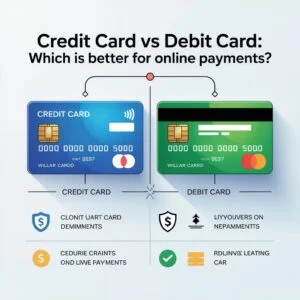
  • Credit Card vs Debit Card: Which Is Better for Online Payments?

    Credit Card vs Debit Card: Which Is Better for Online Payments?

    Online payments have become an everyday part of life — whether you’re shopping, subscribing to services, or paying bills. Two common payment tools are credit cards and debit cards, and many people wonder: Which one is better for online payments?

    In this article, we’ll break down the key differences, benefits, risks, and best uses for each — helping beginners make smarter choices when spending online.

    What Is a Credit Card?

    A credit card is a payment card that lets you borrow money from a bank or lender up to a set limit. When you use it for online shopping, you’re essentially spending a short-term loan you’ll pay back later.

    Key Features of Credit Cards

    • Allows borrowing up to a credit limit
    • Monthly billing cycle
    • Interest charged if balance isn’t paid
    • Often includes rewards

    What Is a Debit Card?

    A debit card deducts funds directly from your bank account. When you make a purchase online, the money leaves your account immediately.

    Key Features of Debit Cards

    • Uses your own money in your bank account
    • No borrowing or interest charges
    • Simple and straightforward
    • Linked to savings or checking account

    Head-to-Head: Credit Card vs Debit Card

    Let’s compare key factors that matter most for online payments.

    Credit Card vs Debit Card Which Is Better for Online Payments?2026
    Credit Card vs Debit Card Which Is Better for Online Payments?2026

    1. Security and Fraud Protection

    Credit Card

    Credit cards generally offer stronger fraud protection. If there’s an unauthorized charge, credit card companies typically investigate and may refund the amount while the case is resolved.

    Debit Card

    Debit cards have protection but usually require quicker reporting, and your actual bank funds may be temporarily unavailable during disputes.

    Winner (Security): Credit Card

    2. Risk of Overspending

    Credit Card

    Because it lets you borrow money, people can overspend and accumulate debt if they aren’t careful.

    Debit Card

    You can only spend what you have — this naturally limits overspending.

    Winner (Budget Control): Debit Card

    3. Interest & Fees

    Credit Card

    Credit cards can charge interest if balances are not paid by the due date. Some cards also have annual fees.

    Debit Card

    Debit card transactions don’t incur interest, and there are typically lower or no fees for online purchases.

    Winner (Low Costs): Debit Card

    4. Rewards & Benefits

    Credit Card

    Many credit cards offer:

    • Cashback
    • Airline miles
    • Reward points
    • Purchase protection

    Debit Card

    Debit cards usually do not offer rewards.

    Winner (Rewards): Credit Card

    5. Build Credit History

    Credit Card

    Responsible credit card use can boost your credit score, which helps with loans, mortgages, and financial credibility.

    Debit Card

    Debit card usage doesn’t affect your credit score.

    Winner (Credit Building): Credit Card

    6. Refunds and Chargebacks

    Credit Card

    Credit cards make it easier to dispute charges and delay payment until the issue is resolved.

    Debit Card

    With debit cards, refunds go directly to your bank account — but disputes can take longer and your money may be tied up.

    Winner (Online Dispute Protection): Credit Card

    7. Daily Spending Needs

    If you want to avoid debt and keep your finances simple, debit cards are convenient and straightforward. There’s no credit cycle or interest to manage — just pay as you go.

    Which One Is Better for Online Payments?

    Here’s a clear breakdown based on different online needs:

    💳 Choose a Credit Card If:

    • You want better fraud protection
    • You want rewards and cashback
    • You want to build credit history
    • You shop frequently online

    🏦 Choose a Debit Card If:

    • You want to avoid debt and interest
    • You have a tight budget
    • You prefer simple, direct payments
    • You rarely need rewards or protection plans

    Tips for Safer Online Payments

    Whichever card you use, follow these safety practices:

    🔐 Use Secure Websites

    Look for “https://” and a padlock symbol.

    📱 Enable Two-Factor Authentication

    Add an extra layer of security for payments.

    🧾 Monitor Transactions Regularly

    Check your bank or credit card statements often.

    🚫 Avoid Public Wi-Fi

    Never enter card details on unsecured networks.

    FAQs – Credit Card vs Debit Card (Online Payments)

    Q1: Is it safe to use a credit card online?

    Yes. Most credit cards offer robust fraud protection and can limit your liability for unauthorized charges.

    Q2: Can I use a debit card for subscriptions?

    Yes, but be cautious — subscription renewals withdraw directly from your bank account.

    Q3: Do debit cards offer fraud protection?

    Yes, but debit cards may require quicker reporting and could temporarily hold your funds during disputes.

    Q4: Will a credit card help my credit score?

    Yes — responsible usage and on-time payments can improve your credit score.

    Q5: Are there online purchases where debit isn’t accepted?

    Some merchants prefer credit cards for reservations, travel bookings, or rentals.

    Conclusion

    Both credit cards and debit cards have value for online payments, but they serve different needs:

    • Credit cards are great for rewards, stronger protection, and building credit.
    • Debit cards are ideal for debt-free, budget-friendly spending.

    For many online shoppers, the best choice is often a credit card for security and perks — as long as you pay your balance on time. If you prefer simplicity and strict budgeting, a debit card fits better.

    Ultimately, understanding your financial habits and goals will help you decide which card suits you best in 2026 — whether you’re making daily purchases, booking travel, or shopping from global online stores.


  • How to Build Passive Income with Low Risk (Beginner-Friendly Guide)

    How to Build Passive Income with Low Risk (Beginner-Friendly Guide)

    Building passive income is one of the smartest financial goals you can set, especially if you want long-term stability and freedom. In 2026, passive income opportunities are more accessible than ever—but many beginners fear losing money due to high risk.

    The good news is that you can build passive income with low risk if you choose the right strategies and stay consistent. This guide explains safe, beginner-friendly passive income ideas that work well in Tier-1 countries like the USA, UK, Canada, and Australia.

    What Is Passive Income?

    Passive income is money earned regularly with minimal active effort after the initial setup.

    Examples of Passive Income:

    • Dividends from investments
    • Rental income
    • Blog or website earnings
    • Interest from savings or bonds

    Unlike active income, passive income allows you to earn even while you sleep.

    Why Focus on Low-Risk Passive Income?

    Many people lose money chasing “get rich quick” schemes. Low-risk passive income focuses on steady, reliable returns instead of fast profits.

    Benefits of Low-Risk Passive Income:

    For beginners, safety matters more than speed.

    1. Dividend-Paying Stocks (Beginner Safe Strategy)

    Dividend stocks are one of the most popular ways to earn passive income with relatively low risk.

    How It Works:

    Companies pay a portion of profits to shareholders regularly (monthly or quarterly).

    Why It’s Low Risk:

    • Established companies
    • Predictable income
    • Long-term growth

    Beginner Tips:

    • Focus on blue-chip companies
    • Reinvest dividends for compounding
    • Avoid high-yield “trap” stocks

    Dividend investing works especially well in Tier-1 markets.

    2. Index Funds & ETFs (Best Low-Risk Passive Income)

    Index funds and ETFs are ideal for beginners looking for safe, hands-off income.

    Why Index Funds Are Safer:

    • Diversification across hundreds of companies
    • Low management fees
    • Market-average returns

    Passive Income Benefit:

    Many ETFs pay regular dividends, making them a dual-income source:

    • Capital appreciation
    • Passive cash flow

    This is one of the most recommended strategies by financial experts.

    3. High-Interest Savings Accounts & Fixed Deposits

    If you want almost zero risk, this option is perfect.

    Why It Works:

    • Guaranteed returns
    • Government-backed protection in Tier-1 countries
    • Easy access to funds

    Best Use Case:

    • Emergency fund
    • Short-term passive income
    • Conservative investors

    Although returns are modest, the safety level is extremely high.

    How to Build Passive Income with Low Risk 2026
    How to Build Passive Income with Low Risk 2026

    4. Blogging & Content Websites (Low Cost, High Potential)

    Blogging is one of the best low-risk digital passive income methods when done correctly.

    Why Blogging Is Low Risk:

    • Very low startup cost
    • No inventory
    • Scalable income

    Monetization Methods:

    • Google AdSense
    • Affiliate marketing
    • Sponsored content

    For beginners, informational blogs (like finance, education, and tech) are AdSense-friendly and stable.

    Blogging requires time upfront, but income becomes passive once content ranks.

    5. Real Estate Investment Trusts (REITs)

    REITs allow you to earn real estate income without owning property.

    Benefits of REITs:

    • Regular dividend payouts
    • Professional management
    • Lower entry barrier

    Why REITs Are Low Risk:

    • Diversified property portfolios
    • Strong regulation in Tier-1 countries

    They are perfect for beginners who want real estate exposure safely.

    6. Bonds & Government Securities

    Bonds are among the lowest-risk income investments.

    Types:

    • Government bonds
    • Treasury bills
    • High-quality corporate bonds

    Why Bonds Are Safe:

    • Fixed interest payments
    • Predictable income
    • Lower volatility than stocks

    Government bonds in Tier-1 countries are considered extremely secure.

    7. Robo-Advisors (Set & Forget Investing)

    Robo-advisors use AI to manage your investments automatically.

    Why They’re Beginner-Friendly:

    • Automatic diversification
    • Risk-based portfolios
    • Low fees

    Passive Income Advantage:

    • Dividend reinvestment
    • Portfolio rebalancing
    • No manual effort

    Perfect for people who want hands-off passive income.

    8. Digital Products (Once Create, Earn Repeatedly)

    Creating digital products is a low-risk way to earn passive income online.

    Examples:

    • E-books
    • Online courses
    • Templates
    • Guides

    Why It’s Low Risk:

    • No physical inventory
    • High profit margins
    • Scalable income

    Once created, these products can generate income for years.

    How to Reduce Risk While Building Passive Income

    Low risk doesn’t mean no risk. Smart planning is essential.

    Risk-Reduction Tips:

    • Diversify income sources
    • Avoid “guaranteed high returns” promises
    • Start small and scale gradually
    • Reinvest earnings

    Consistency beats aggressive investing every time.

    How Much Money Do You Need to Start?

    You don’t need a large amount to begin.

    Beginner-Friendly Approach:

    • Start with $100–$300
    • Invest monthly
    • Increase slowly

    Digital passive income (like blogging) can start with almost zero investment.

    Common Passive Income Mistakes to Avoid

    Many beginners fail due to avoidable errors.

    Mistakes:

    • Expecting instant results
    • Putting all money in one source
    • Ignoring research
    • Quitting too early

    Passive income requires patience and discipline.

    FAQs – Passive Income with Low Risk

    Q1: What is the safest passive income source?

    High-interest savings accounts, government bonds, and index funds are the safest.

    Q2: Can beginners build passive income without money?

    Yes. Blogging, digital products, and content creation require time more than money.

    Q3: Is passive income really passive?

    Most passive income requires effort upfront but becomes passive over time.

    Q4: How long does it take to earn passive income?

    It depends on the method. Investments can pay immediately, while blogging may take months.

    Q5: Can passive income replace a full-time job?

    Yes, but it usually takes years of consistent effort and reinvestment.

    Conclusion

    Building passive income with low risk is completely possible in 2026—even for beginners. The key is choosing safe strategies, avoiding shortcuts, and staying consistent.

    Index funds, dividend stocks, bonds, blogging, and digital assets provide stable, scalable income with manageable risk. Focus on long-term growth rather than quick profits, and your passive income will grow steadily over time.


  • Best Investment Options in 2026 for Beginners (Low Risk & High Returns)

    Best Investment Options in 2026 for Beginners (Low Risk & High Returns)

    Investing money wisely is one of the most important financial skills, especially for beginners. As we move into 2026, new opportunities, digital platforms, and smarter investment tools have made investing more accessible than ever before. However, beginners often struggle with one key question: Where should I invest my money safely and profitably?

    In this detailed guide, we’ll explore the best investment options in 2026 for beginners, focusing on low risk, steady growth, and long-term wealth creation, particularly suitable for countries like the USA, UK, Canada, and Australia.

    Why Beginners Should Start Investing in 2026

    The financial landscape in 2026 is very different from previous years. Inflation, rising living costs, and economic uncertainty mean that simply saving money in a bank account is no longer enough.

    Key Reasons to Invest:

    • Beat inflation and protect purchasing power
    • Build long-term wealth
    • Generate passive income
    • Achieve financial independence earlier

    Starting early—even with small amounts—can make a huge difference due to compounding.

    1. Stock Market Investing (Beginner-Friendly Approach)

    Stock market investing remains one of the most popular investment options in 2026.

    Why Stocks Are Good for Beginners:

    Instead of picking individual stocks, beginners should focus on diversification.

    Best Stock Strategies for Beginners:

    • Blue-chip companies
    • Dividend-paying stocks
    • Long-term holding (5–10 years)
    Tip: Avoid day trading as a beginner. Long-term investing is safer and more profitable.

    2. Index Funds & ETFs (Best Low-Risk Option)

    Best Investment Options in 2026 for Beginners
    Best Investment Options in 2026 for Beginners

    For beginners in Tier-1 countries, Index Funds and ETFs are considered one of the safest and smartest investments in 2026.

    What Are Index Funds?

    Index funds track a market index like:

    • S&P 500
    • NASDAQ 100
    • FTSE 100

    Benefits:

    • Low fees
    • Instant diversification
    • Minimal risk compared to individual stocks
    • Perfect for beginners

    Many financial experts recommend ETFs as the first investment choice for new investors.

    3. High-Interest Savings Accounts & Money Market Funds

    If you want zero to very low risk, this option is ideal.

    Why It’s Still Relevant in 2026:

    • Stable returns
    • High liquidity
    • Government-backed safety in Tier-1 countries

    Best For:

    • Emergency funds
    • Short-term goals
    • Risk-averse beginners

    Although returns are lower, it’s a safe foundation before moving into higher-risk investments.

    4. Real Estate Investment (Without Buying Property)

    Traditional real estate requires a large amount of money, but in 2026, beginners can invest without owning physical property.

    REITs (Real Estate Investment Trusts):

    • Invest in commercial & residential properties
    • Pay regular dividends
    • Trade like stocks

    Benefits:

    • Passive income
    • Diversification
    • Lower entry barrier

    REITs are especially popular in countries like the USA and UK.

    5. Cryptocurrency (Beginner & Low Exposure Strategy)

    Cryptocurrency is still relevant in 2026, but beginners must approach it carefully.

    Beginner-Friendly Crypto Strategy:

    • Invest only 5–10% of total capital
    • Focus on established coins (not hype tokens)
    • Long-term holding

    Risks to Consider:

    • High volatility
    • Regulatory uncertainty
    • Emotional investing mistakes

    Crypto can boost returns, but it should never be your main investment as a beginner.

    6. Robo-Advisors (Smart Investing for Beginners)

    Robo-advisors are automated investment platforms that create and manage portfolios for you.

    Why Robo-Advisors Are Popular in 2026:

    • AI-powered portfolio management
    • Low fees
    • No investing knowledge required

    Best For:

    • Busy individuals
    • First-time investors
    • Hands-off investing

    They automatically rebalance your portfolio based on market conditions.

    7. Bonds & Government Securities

    Bonds are one of the safest investment options for beginners.

    Types of Bonds:

    • Government bonds
    • Treasury bills
    • Corporate bonds (low-risk only)

    Benefits:

    • Stable income
    • Low volatility
    • Ideal for conservative investors

    In Tier-1 countries, government bonds are considered extremely secure.

    8. Investing in Yourself (Underrated but Powerful)

    Not all investments are financial products. In 2026, skill-based investing is one of the highest ROI options.

    Examples:

    • Learning digital skills
    • Blogging & content creation
    • Online courses & certifications

    For bloggers, investing in:

    • SEO tools
    • Writing skills
    • Website optimization

    can generate long-term passive income far beyond traditional investments.

    Common Investment Mistakes Beginners Should Avoid

    Avoiding mistakes is just as important as choosing the right investment.

    Biggest Beginner Errors:

    • Investing without research
    • Chasing quick profits
    • Emotional buying & selling
    • Ignoring diversification
    • Investing money needed for daily expenses

    Patience and consistency are the keys to success.

    How Much Should Beginners Invest in 2026?

    You don’t need a lot of money to start.

    Beginner Investment Rule:

    • Start with what you can afford
    • Invest monthly (Dollar-Cost Averaging)
    • Increase investment gradually

    Even $100–$300 per month can grow significantly over time.

    FAQs – Best Investment Options in 2026

    Q1: What is the safest investment for beginners in 2026?

    Index funds, government bonds, and high-interest savings accounts are considered the safest options.

    Q2: Can beginners invest with low money?

    Yes, many platforms allow you to start with very small amounts through fractional investing.

    Q3: Is stock market investing risky for beginners?

    It can be risky if done incorrectly. Long-term investing in diversified funds reduces risk significantly.

    Q4: Should beginners invest in cryptocurrency in 2026?

    Yes, but only a small portion of your portfolio and with a long-term mindset.

    Q5: Are robo-advisors worth it?

    Yes, especially for beginners who want a hands-off, automated investment approach.

    Q6: Which investment gives the highest return?

    Stocks and skill-based investments offer the highest long-term returns, but they also carry more risk.

    Conclusion

    The best investment options in 2026 for beginners focus on safety, diversification, and long-term growth. Index funds, ETFs, bonds, and robo-advisors provide a strong foundation, while limited exposure to crypto and skill-based investments can boost returns.

  • Ultimate Travel Guide to Visit Vuzillfotsps Greatest Info 2026

    Ultimate Travel Guide to Visit Vuzillfotsps Greatest Info 2026

    Visiting a new destination always carries a sense of excitement—but when it’s a place as mysterious and enchanting as to Visit Vuzillfotsps, curiosity skyrockets. Hidden from the crowded tourist circuits, to Visit Vuzillfotsps offers a perfect mix of natural beauty, local culture, and experiences that feel truly unique. Whether you’re a solo traveler, a couple seeking peace, or a family looking for adventure, this guide has everything you need to plan the perfect trip.

    In this guide, we’ll explore the best time to visit, must-see attractions, dining and accommodation options, budget tips, smart travel hacks, and a few insider secrets that will make your journey unforgettable.

    Introduction to to Visit Vuzillfotsps

    to Visit Vuzillfotsps might not appear on every traveler’s radar yet, but that’s part of its charm. Picture a town where centuries-old architecture meets rolling hills, lakes shimmer under the sun, and locals greet you with genuine warmth. It’s the kind of place that doesn’t just fill your camera roll—it leaves lasting memories.

    Think of visiting to Visit Vuzillfotsps like opening a surprise gift: you don’t know exactly what you’ll find, but you know it will be extraordinary.

    Best Time to Visit Vuzillfotsps

    Timing your visit can dramatically influence your experience. Seasons here bring unique advantages:

    Spring (March – May)

    Spring is ideal for first-time visitors. Flowers bloom, weather remains mild, and hiking trails are perfect for long walks. Crowds are minimal, which means better photos and more peaceful sightseeing.

    Summer (June – August)

    Summer brings energy and festivals. Streets are lively, markets are buzzing, and outdoor adventures shine under long sunny days. Accommodation tends to be pricier, but it’s worth it if you love vibrant experiences.

    Autumn (September – November)

    If calm, golden landscapes appeal to you, autumn is magical. Temperatures are cooler, forests turn into a palette of oranges and reds, and prices drop after the summer peak.

    Winter (December – February)

    For those seeking solitude and cozy vibes, winter transforms to Visit Vuzillfotsps into a peaceful wonderland. Crisp air, foggy mornings, and warm cafes make it ideal for relaxation and quiet exploration.

    Season Weather Crowd Level Ideal For
    Spring Mild & colorful Low Photography, sightseeing
    Summer Warm & lively High Festivals, outdoor fun
    Autumn Cool & scenic Moderate Hiking, culture
    Winter Cold & peaceful Low Relaxation, reflection

    How to Get There & Move Around

    By Air

    Most visitors arrive via the regional airport, then take a short train or taxi ride to the town center. Flights are frequent from major cities.

    By Train or Bus

    Public transport offers scenic routes along rivers and valleys. Buses are cheaper but may run less frequently in remote areas.

    By Car

    Renting a car gives freedom to explore hidden spots. Roads are safe, and signboards are easy to follow.

    On Foot or Bicycle

    For eco-friendly travel and close-up exploration, walking or cycling is perfect. Trails through forests, hills, and lakesides allow you to experience the town intimately.

    Must-See Attractions

    Vuzillfotsps is full of hidden gems. Here are some you shouldn’t miss:

    1. The Old Town

    Wander narrow cobbled streets, discover quaint cafés, and enjoy local markets. Each corner tells a story.

    2. Lake Eloria

    A crystal-clear lake surrounded by peaks. Rent a boat, watch the sunset, or simply relax by the shore.

    3. Whispering Falls

    A moderately challenging trail leads to a hidden waterfall. Early morning hikes reward you with misty, magical views.

    4. to Visit Vuzillfotsps Heritage Museum

    Explore centuries-old artifacts, folklore, and art. A great place to learn about local history.

    5. Night Market of Lirona

    Bursting with lights, crafts, and street food, the market offers sensory delights for visitors of all ages.

    6. Skyview Ridge

    Perfect for photographers, the ridge offers panoramic views during sunrise or sunset, with minimal crowds.

    Where to Stay and Eat

    Accommodation Options

    Type Price Range Experience
    Guesthouses $25–$60/night Cozy, family-run
    Boutique Hotels $80–$150/night Stylish, local charm
    Eco-Lodges $100–$200/night Nature-focused, sustainable

    Tip: Book early for spring and summer, especially during festivals.

    Local Cuisine to Try

    • Vuzill Stew: Slow-cooked delicacy with rich flavors.
    • Herbal Teas: Brewed from mountain herbs, perfect after a hike.
    • Street Snacks: Dumplings, fried treats, and local pastries.

    Eating at family-run eateries is as much about stories as it is about taste.

    Budget Tips & Cost-Saving Advice

    Traveling smartly helps you enjoy to Visit Vuzillfotsps without overspending:

    1. Visit during autumn or winter for lower accommodation rates.
    2. Use public transport instead of taxis.
    3. Eat like locals to save money and taste authentic dishes.
    4. Look for city passes or bundled tickets for attractions.
    5. Carry a reusable water bottle to cut costs and reduce waste.

    Smart Travel Hacks

    • Pack layers: Weather can shift quickly in hills and valleys.
    • Offline maps: Essential for areas with poor signal.
    • Cash backup: Small shops may not accept cards.
    • Learn key phrases: Even simple greetings earn smiles.
    • Be flexible: The best experiences often happen unexpectedly.
    • Respect local customs: Polite behavior and modest attire go a long way.

    Sustainable and Responsible Travel

    to Visit Vuzillfotsps encourages eco-tourism:

    • Avoid littering and stay on trails.
    • Support local artisans and small businesses.
    • Choose eco-lodges or sustainable transport options.

    Traveling responsibly ensures the beauty remains for generations to come.

    Photography & Instagram Tips

    For those capturing memories:

    • Sunrise at Skyview Ridge: Golden hour perfection.
    • Market shots: Vibrant colors and lively scenes.
    • Lake reflections: Calm mornings give mirror-like water.

    Even casual travelers will find countless photo-worthy moments.

    Family-Friendly Activities

    to Visit Vuzillfotsps is safe and engaging for all ages:

    • Interactive workshops for kids.
    • Gentle hikes and lakeside picnics.
    • Storytelling sessions with local elders.

    Families can combine education, fun, and adventure effortlessly.

    Final Thoughts

    to Visit Vuzillfotsps isn’t just a travel destination; it’s an experience. From misty waterfalls and serene lakes to bustling markets and heartfelt local hospitality, every corner offers a new story. Whether you crave adventure, relaxation, or cultural immersion, this hidden gem has something for everyone.

    Take your time, explore at your pace, savor the food, and connect with the people. Your memories from to Visit Vuzillfotsps will stay long after your journey ends.

    Frequently Asked Questions (FAQs)

    1. Is Vuzillfotsps safe for solo travelers? Yes, it’s known for its welcoming locals and low crime rate. Usual precautions are enough.

    2. What’s the best time to visit? Spring and autumn are ideal for comfortable weather and vibrant scenery, but year-round visits are rewarding.

    3. Are there budget-friendly options? Yes, guesthouses, street food, and local transport make it very affordable without compromising quality.

    4. Can families enjoy it? Absolutely. Safe outdoor activities, interactive workshops, and calm surroundings make it family-friendly.

    5. How long should I plan to stay? A 4–7 day trip is perfect to explore main attractions and enjoy local life leisurely.

    6. Are vegetarian dishes widely available? Yes, most eateries offer fresh, tasty vegetarian options.

    7. Is transportation easy for non-locals? Yes, public buses, rental cars, and walking paths make getting around convenient.

    8. Can I hike to remote trails? Yes, most trails are open to public; some protected areas may require a small entry fee.

    9. Should I hire a guide? Not necessary for main attractions, but local guides can enrich your experience for hidden spots.

    10. What souvenirs are recommended? Handmade textiles, pottery, herbal teas, and local crafts make perfect gifts.

    You may also read

    Paula Profit

  • Dragon4D Tips That Help You Stay Ahead of Others 2026

    Dragon4D Tips That Help You Stay Ahead of Others 2026

    Every gamer wants an edge. That feeling of being just one step ahead, predicting moves before they happen, and turning small advantages into big wins — it’s addictive. If you’ve ever asked yourself, “How can I play smarter and rise above the rest?”, then you’re in the right place. Here are some practical, real-life Dragon4D tips that help you stay ahead of others.

    Tip 1: Observe Before You Act

    Have you noticed how the best players rarely rush? They watch first, move later. Observation is more than patience; it’s strategy.

    Imagine this: two players enter a game at the same level. One dives in recklessly, hoping for a lucky streak. The other pauses, scans the environment, studies the patterns. Who has the advantage? Clearly, the observer.

    On Dragon4D, taking a moment to understand the situation can change your game entirely. You’ll notice trends others miss, spot opportunities early, and avoid pitfalls that catch impatient players off guard.

    Tip 2: Focus on Small, Consistent Wins

    It’s tempting to chase the big, flashy plays, but consistency is what keeps top players ahead. Small wins add up faster than rare, risky victories.

    Take the example of Sara, a casual gamer turned serious Dragon4D player. At first, she aimed for huge moves every session. She lost more than she won and felt frustrated. Then she shifted her approach: she aimed for small, achievable goals, building momentum step by step.

    Within weeks, her performance skyrocketed. The lesson? Sometimes the slow and steady strategy beats flashy but reckless action. Consistency creates reliability — and in competitive play, reliability matters more than luck.

    Tip 3: Learn from Every Move

    Mistakes aren’t failures — they’re lessons waiting to be understood. Every time you make a wrong decision in Dragon4D, pause and ask yourself: “Why did this happen, and how can I do better next time?”

    Real-life example: Ahmed, a mid-level player, used to ignore losses. He thought, “It’s just bad luck.” After a few weeks of reflection, he started reviewing his moves. Slowly, he recognized patterns of errors and adjusted his choices. His win rate improved, and he felt more confident than ever.

    Remember, the smartest players aren’t the ones who never fail — they’re the ones who learn fastest.

    Tip 4: Master Timing and Patience

    Do you act too quickly under pressure? Timing is often overlooked but can be a game-changer.

    On Dragon4D, patience allows you to anticipate your opponents’ moves. Waiting for the right moment doesn’t mean hesitation — it means strategy. One well-timed move can outweigh a dozen impulsive ones.

    Think of it like chess: rushing a decision can cost everything, but waiting and reading the board carefully can secure victory.

    Tip 5: Stay Calm Under Pressure

    Pressure can be exciting, but it can also cloud judgment. The most successful Dragon4D players stay calm, even in tense moments.

    Real-life example: Lina was trailing behind her opponents in a critical match. Her heart raced, and the temptation to act rashly was strong. Instead, she took a deep breath, focused on the patterns she had observed, and made a careful, calculated move. That single decision turned the tide in her favor.

    Calmness under pressure isn’t just a skill — it’s a superpower in disguise.

    Tip 6: Adapt and Adjust Quickly

    No strategy works forever. Smart players know when to stick to their plan and when to adjust.

    On Dragon4D, adaptability is crucial. If something isn’t working, don’t be stubborn. Shift your strategy. Try a new approach. Sometimes, staying flexible is the fastest way to regain control and stay ahead.

    Imagine you’re driving in traffic: sticking rigidly to one route may waste time. But spotting a quicker lane, adjusting, and flowing with the situation keeps you ahead. Gaming works the same way.

    Tip 7: Build a Winning Mindset

    At the core, staying ahead isn’t just about skill — it’s about mindset. Confidence, resilience, and optimism are game-changers.

    Ask yourself: Do I believe I can win? Do I focus on what I can control instead of what I can’t?

    Players with a strong mindset don’t panic at setbacks. They see challenges as opportunities to grow. They trust their instincts, follow their strategies, and enjoy the process, not just the outcome.

    Tip 8: Use Every Session as Practice

    Dragon4D Tips That Help You Stay Ahead of Others 2026
    Dragon4D Tips That Help You Stay Ahead of Others 2026

    Even casual play counts. Every time you engage with Dragon4D, treat it as an opportunity to sharpen your skills.

    Notice patterns. Test strategies. Learn from each win or loss. Over time, these small moments accumulate into experience — experience that will keep you ahead of others who only play for fun or rely on luck.

    Final Thoughts: Stay Ahead, Step by Step

    Success in Dragon4D isn’t about magic tricks or instant wins. It’s about small habits, patience, observation, and learning. By observing, focusing on consistency, mastering timing, staying calm, adapting quickly, and cultivating a strong mindset, you naturally put yourself ahead of others.

    So, why wait? Start implementing these tips today. Play smarter, move with purpose, and watch how your Dragon4D journey transforms.